the mirror-factory
The mirror-factory is a metaphorical project proposed by Granger in the final pages of Fahrenheit 451, representing a radical new beginning for a society that has lost its capacity for self-reflection. It symbolizes the need for humanity to confront its own image honestly after the catastrophic failure of a culture built on distraction and enforced happiness.
Origin and Context
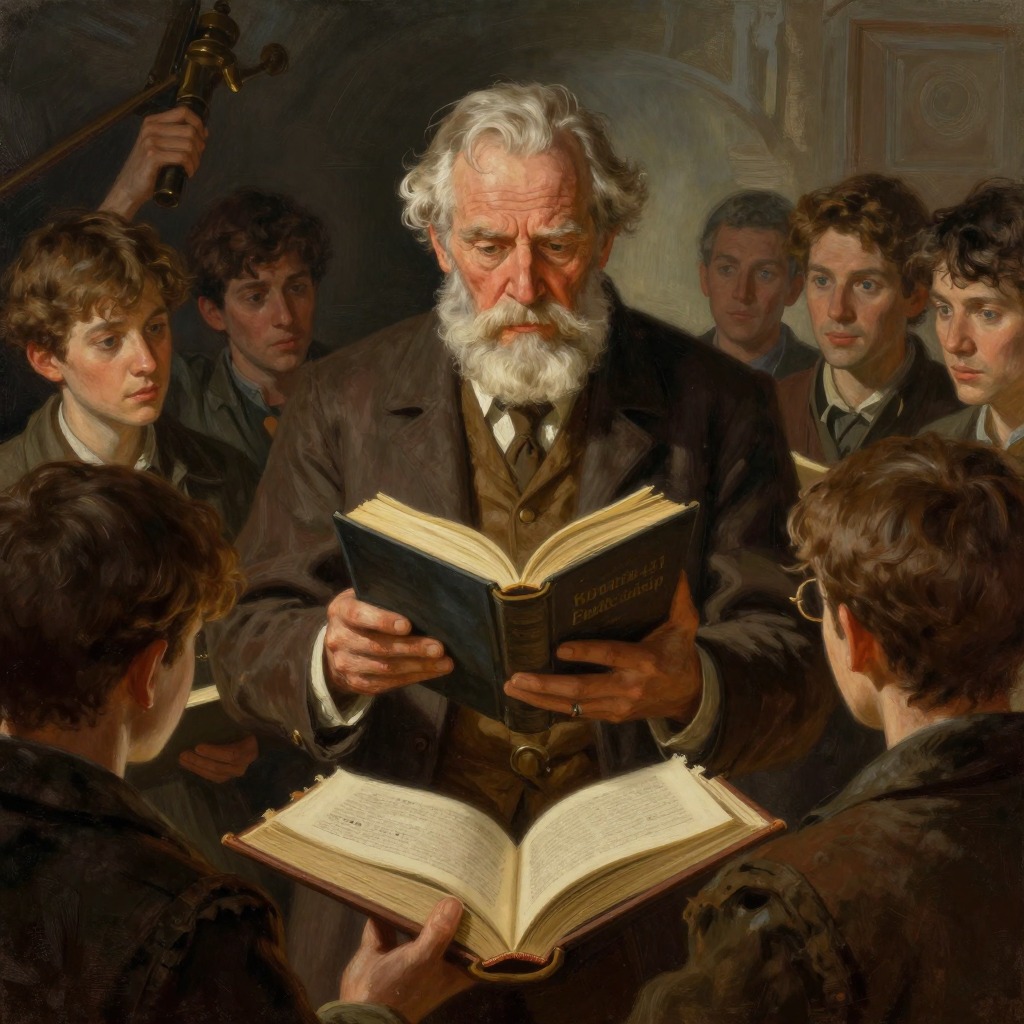
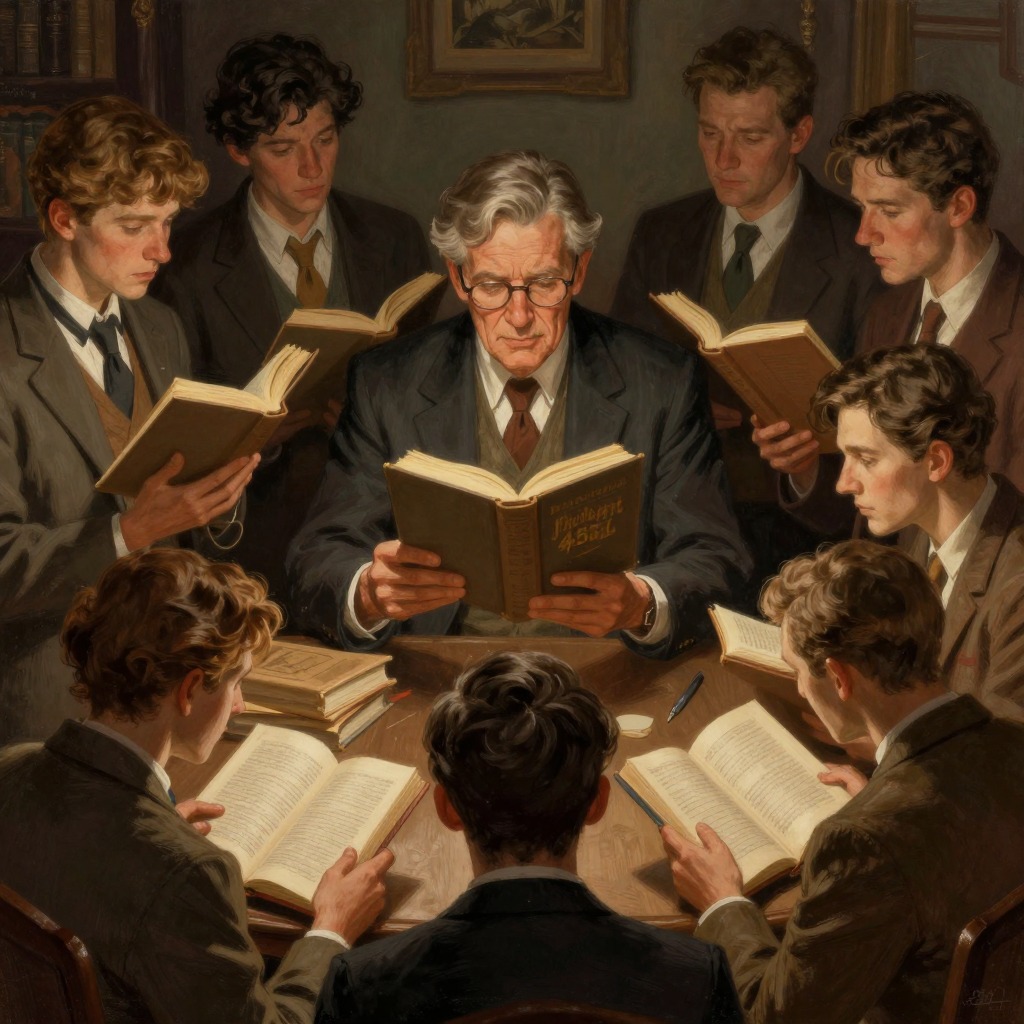
The mirror-factory is introduced by Granger immediately after the bombing of the city, as the small group of wandering intellectuals—the Book People—eat breakfast by a campfire on the riverbank. The war has just ended in a single, devastating instant, and the city lies in ruins. Granger, who has spent years organizing a loose network of people who memorize books to preserve knowledge, turns his thoughts not to the past but to the future. He proposes building a mirror-factory as the first constructive act in a world that has just witnessed its own self-destruction. The proposal comes at a moment of profound silence and reflection, as the men watch the sun rise and the birds return to the trees, signaling that life continues despite the catastrophe.
Symbolic Meaning
The mirror-factory is not a literal industrial facility but a symbolic project. Granger's idea is to "put out nothing but mirrors for the next year and take a long look in them." This directly addresses the central problem of the society Montag has fled: a culture that systematically prevents self-examination. Captain Beatty, in his long monologue to Montag, had articulated the logic of this system: people want to be happy, and happiness is equated with constant entertainment, the elimination of controversy, and the suppression of any thought that might cause discomfort. Beatty described how books were burned because they "show the pores in the face of life," and how the comfortable people want only "wax moon faces, poreless, hairless, expressionless." The mirror-factory is the antidote to this: it forces people to see themselves as they really are, with all their flaws, contradictions, and responsibilities. It is a call for honesty, accountability, and the painful work of self-knowledge that the old society had systematically avoided.
Connection to the Book People's Mission
The mirror-factory is the culmination of the Book People's philosophy. Granger has already explained that their purpose is not to feel superior or to incite revolution, but to preserve knowledge and to remember. He tells Montag that they are "nothing more than dust-jackets for books," and that their task is to wait, to pass on what they know, and to hope that someday people will be ready to listen. The mirror-factory gives this passive preservation an active, forward-looking dimension. It is a project that acknowledges the past—the "damn silly things we've done for a thousand years"—and uses that knowledge to build a different future. Granger's speech about the Phoenix, which burns itself up only to be reborn, is directly linked to this idea: humans have the one advantage over the mythical bird of knowing their own mistakes, and the mirror-factory is the tool for keeping that knowledge alive.
Significance in the Narrative
The mirror-factory appears at the very end of the novel, after Montag has undergone his complete transformation from a fireman who burned books to a fugitive who carries a book in his memory. It represents the final stage of his journey: not just escape from the old world, but active participation in building a new one. The proposal is also a direct response to the society Beatty described, where the pursuit of happiness had become a tyranny that eliminated all critical thought. Beatty had explained that the system worked by giving people "contests they win by remembering the words to more popular songs or the names of state capitals," by cramming them full of "non-combustible data" so they feel brilliant without actually thinking. The mirror-factory reverses this entirely: it offers no easy answers, no entertainment, no distraction—only the difficult, essential task of looking at oneself and one's society with clear eyes. It is the final, hopeful note in a novel that has traced the destruction of a civilization, suggesting that the capacity for self-criticism is the first step toward genuine renewal.